The Overlanding Tyre Pressures Guide: Don’t Just Guess—Know.
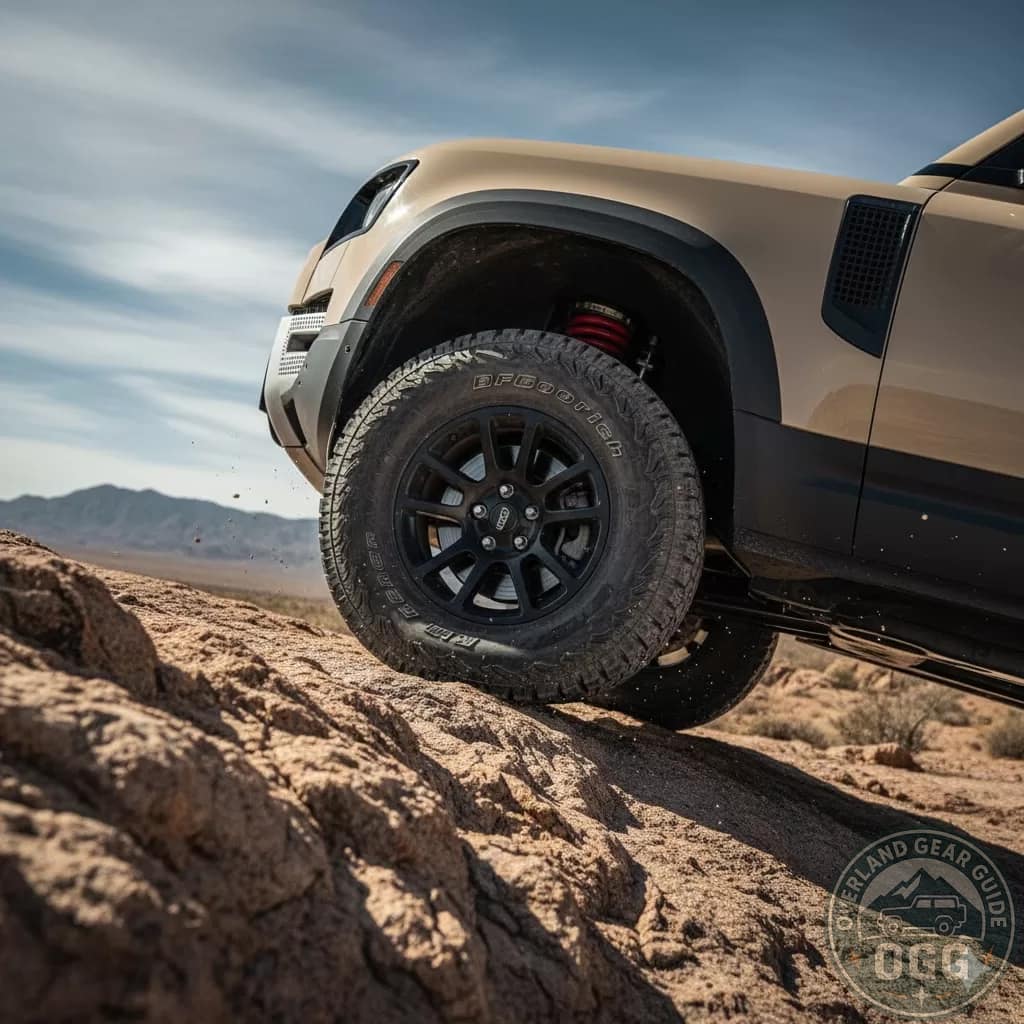
Everything you need to set the right PSI for the surface under your tyres—plus how to tune for weight, tyre construction, wheel size, and speed. Includes printable quick-reference, field techniques, and a calculator for personalised starting points. Additionally, understanding the various elements of tyre anatomy for overlanding can significantly enhance your vehicle’s performance on rugged terrains. By familiarising yourself with tread patterns, sidewall strength, and load ratings, you can make more informed choices when it comes to selecting tyres for your adventures. This knowledge not only helps in achieving optimal PSI but also ensures that your tyres can withstand the demands of overlanding excursions.
How to use this guide
- Start with the range for your terrain then adjust for rig weight (light <2.2t / medium 2.2–3.0t / heavy >3.0t).
- Drop in 2–3 PSI steps, drive 200–300 m, reassess steering feel, grip, and sidewall bulge.
- Keep speeds modest when aired down; re-inflate for pavement and long hardpack transits.
- Use a reliable gauge + fast deflator; air back up with a high-flow compressor.
- Watch heat: if sidewalls feel hot or steering goes vague, add air or slow down.
- Match front/rear to load split; heavy rears often need +2–4 PSI on-road.
Pressure tuning fundamentals (beyond the numbers)
Tyre construction
LT (Light Truck) vs P-metric: LT casings are stiffer and often need higher on-road PSI for the same load. Off-road they tolerate lowering well—apply the same percentage reductions from your highway baseline.
Wheel & sidewall
More sidewall (e.g., 17" on 33s) allows lower PSI safely at crawl speed. Low-profile A/Ts on big rims have less cushion—don’t chase extreme lows on rock without beadlocks.
Load & balance
Heavy drawers, water, spares, and roof loads shift the balance rearward. On-road, run rears slightly higher; off-road, fronts can be a touch lower for steering bite while rears carry weight.
Heat & speed
Low PSI + speed = heat. Corrugations and long beach runs are where tyres die. Keep speed down, take breaks, and check sidewall temperature by hand.
Sand & Dunes (flotation first)
Soft sand demands a wide, gentle footprint so you ride on the surface. Momentum and smooth inputs matter more than power.
| Rig weight | Typical PSI (A/T) | Notes |
|---|---|---|
| Light (<2.2t) | 12–16 | Go lower in powder; avoid sharp steering at crests. |
| Medium (2.2–3.0t) | 14–18 | Plan run-ups; keep throttle smooth and constant. |
| Heavy (>3.0t) | 16–20 | Watch heat on beach transits; momentum > torque. |
Technique
- Stage straight run-ups; steer gently on the crest.
- If bogging, stop early, reset tracks, use boards.
- Carry a shovel and traction boards—they save tyres.
Failure modes
- Wheelspin digs — lower PSI or use boards.
- Bead unseat from abrupt steering at very low PSI.
- Sidewall heat on long, fast beach sections.
Mud & Clay (tread evacuation)
You want lugs to clear and bite. Too low can fold sidewalls and feel vague; too high skates on packed mud.
| Rig weight | Typical PSI (A/T or M/T) | Notes |
|---|---|---|
| Light | 16–22 | Keep some firmness for shoulders and steering. |
| Medium | 18–24 | Clean lugs with brief wheel speed, not constant spin. |
| Heavy | 20–26 | Balance bite vs. sidewall support; avoid lateral ruts. |
Technique
- Pick higher, firm lines; straddle ruts where possible.
- Steady throttle; recover with boards/strap rather than burying it.
- Air up slightly if steering goes mushy.
Failure modes
- Low PSI + camber = sidewall pinch/de-bead.
- Suction pits — plan exits before entry.
- Improper recovery points — never use tow balls.
Rocks & Ledges (deformation & protection)
Use lower pressures to wrap tread over edges at crawl speed. Protect sidewalls; avoid lateral shocks.
| Rig weight | Typical PSI (LT A/T or M/T) | Notes |
|---|---|---|
| Light | 14–18 | Spot carefully; keep shoulders off sharp edges. |
| Medium | 15–20 | Slow steering; avoid side loads on off-camber faces. |
| Heavy | 16–22 | Consider beadlocks if frequent crawling. |
Technique
- Creep with smooth throttle—let tyres conform.
- Use a spotter; reset the line if diffs scrape repeatedly.
- Build small ramps from rocks/sand if needed.
Failure modes
- Rim strikes from speed — keep it walking pace.
- Bead unseat from lateral shock.
- Sidewall cuts on turned tyres against rock.
Gravel & Corrugations (damping washboard)
A small reduction improves comfort and control by adding compliance. Respect heat and speed.
| Rig weight | Typical PSI (A/T) | Notes |
|---|---|---|
| Light | 24–30 | Short sections at moderate speeds; don’t “skip” corrugations. |
| Medium | 26–32 | Check temps at breaks; extend casing life. |
| Heavy | 28–36 | Err higher under load; reinflate for long transits. |
Snow & Ice (footprint + finesse)
Cold drops pressure naturally. Aim for a longer, flatter patch; use very gentle inputs. On ice, tyres need micro-slip, not spin.
| Rig weight | Typical PSI (A/T, winter-capable) | Notes |
|---|---|---|
| Light | 16–22 | Feather throttle; avoid sudden steering/braking. |
| Medium | 18–24 | Chains where legal for ice; momentum is gentle. |
| Heavy | 20–26 | Weight helps, but manage descents carefully. |
Combined quick-reference & tools
.png "The Overlanding Tyre Pressures Guide: Don't Just Guess, Know. 2")
Prefer personalised numbers? Use our tool to blend vehicle, load, tyre construction, and terrain.
Open Tyre Pressure CalculatorWhat Are the Recommended Tyre Pressures for Overlanding in Different Terrains?
When embarking on an overlanding adventure, understanding tyre pressures is crucial for optimal performance. Different terrains demand unique adjustments; for rocky paths, lower pressures increase traction, while sandy surfaces require moderate settings. Consult “The Overlanding Tyre Pressures Guide” to ensure your vehicle is equipped for every challenge you encounter.
Air-Management Essentials (field-tested)
Gauge, deflator, compressor — the fastest combination for real-world trails.
JACO ElitePro-X Tire Pressure Gauge (60 PSI)

- Accurate: ANSI B40.1 (±1.5%), no batteries.
- Lightning Chuck™ locks airtight; quick bleed valve.
- Durable aluminium body; braided hose.
ARB ARB600 E-Z Deflator Kit (10–60 PSI)

- Core-removal design for very fast deflation.
- Bronze bourdon tube gauge; robust brass/stainless build.
- 1 PSI increments; geared brass movement.
MORRFlate TenSix 10.6 CFM 12V Compressor

- Speed: Set of 35s in minutes with 4-tyre kit.
- ~80% duty cycle; ~50A continuous; threaded filters.
- Ideal with multi-tyre hose systems.
Disclosure: Some links are affiliate. If you buy through them, we may earn a small commission at no extra cost to you.
Field workflow & quick troubleshooting
Fast air-down → trail → air-up
- Check placard PSI; note current load (water, fuel, passengers).
- Pick terrain range; drop in 2–3 PSI steps; drive and reassess.
- Before pavement: air up to placard (or slightly above for loaded highway miles).
Common issues
- Vague steering: Add 2 PSI to fronts.
- Hop on corrugations: Drop 2 PSI, reduce speed.
- Sidewall hot: Slow down and add air.
© Overland Gear Guide — Tested in the field by real overlanders.