Chains, Tyres, and Lockers: Your Ultimate Guide to Icy Trails
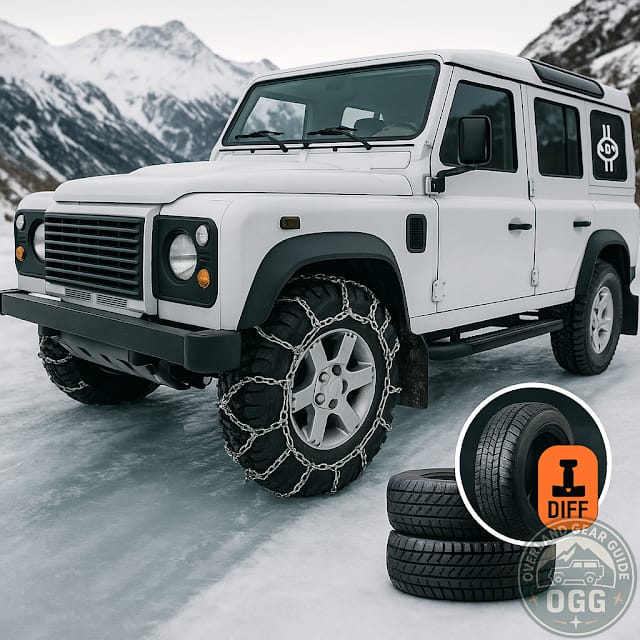
On winter trails, traction comes from three levers you control: chains (mechanical bite), tyres (compound & tread), and lockers (how torque shares across an axle). Here’s how each works on snow/ice, when to combine them, and how to stay safe on slick descents and off-camber sections.
Tyre chains: instant mechanical bite
Chains turn slick, polished surfaces into something your tyres can “grab.” They shine on ice and hard-packed snow, and can help on steep, refrozen climbs/descents.
When to fit
- Glare ice, refrozen ruts, steep hardpack.
- When momentum alone won’t carry a climb safely.
- Fit before you’re stuck—safe, flat pull-out.
Where to fit
- Follow your manual. Many rigs: fronts first for steering & braking.
- For max drive on climbs: fronts (control) + rears (traction) when allowed.
Fit & safety
- Practice at home with gloves; tarp to kneel on.
- Tension evenly; drive 100–200 m and re-check.
- Keep speeds low; remove on bare pavement.
Winter & AT tyres: compound, siping, tread
- Winter/3PMSF ATs: Softer compounds stay pliable in the cold; dense siping creates micro-edges on ice.
- Classic mud-terrains: Stiff lugs + fewer sipes; they harden and slide more on ice.
- Tread depth matters: Shallow tread reduces snow packing/clearing and braking grip.
Bottom line: Expecting regular snow/ice? Run winter-rated rubber (or modern 3PMSF ATs) and add chains when conditions demand.
Lockers on snow & ice: strengths and gotchas
What lockers do well
- At very low speed they stop the “one-wheel peel,” keeping both axle tyres turning.
- Great for controlled climbs where one tyre unloads in ruts.
Use with care
- Locked axles resist turning; a locked front can push wide on slick off-camber turns.
- Engage to start/finish a move, unlock to steer through bends.
Smart combinations for real trails
- Hardpack descent: Chains front, 4L, engine braking; lockers off unless needed to keep a straight crawl.
- Icy climb with ruts: Chains front (rear too if allowed); rear locker for drive; unlock to steer on a sidehill.
- Deep fresh snow: Lower PSI, maintain flow with winter/AT tyres; save chains for refrozen sections.
Setup & PSI for winter traction
- PSI starting points: Powder 15–20 psi; packed 18–24 psi; heavy rigs +2–4 psi. Reinflate before highway.
- Modes & gears: Use “snow/ice” modes; start in a taller gear to soften torque shock.
- Chain clearance: Verify at full lock and bump; check lines/struts/calipers.
Practice drills (empty snowy lot, 10–20 min)
Chain fit & retension
- Fit one axle, drive 100–200 m, re-tension evenly.
- Practice removal and stowing with cold gloves.
Locker etiquette
- On a gentle incline, climb unlocked → repeat with rear locked.
- Unlock before a turn; feel steering difference.
PSI exploration
- Run the same loop at 24, 20, then 18 psi; note start/stop distance & steering feel.
Recommended gear for icy trails

Snow Chains
Maximum bite on ice/hardpack. Practice install at home.

All-Terrain Tyres (3PMSF)
Cold-weather compound + siping for winter grip.

Locking Differential
Locks an axle for steady traction at very low speed—use wisely on slick turns.

Traction Boards
Low-risk self-recovery tool on snow and ice.
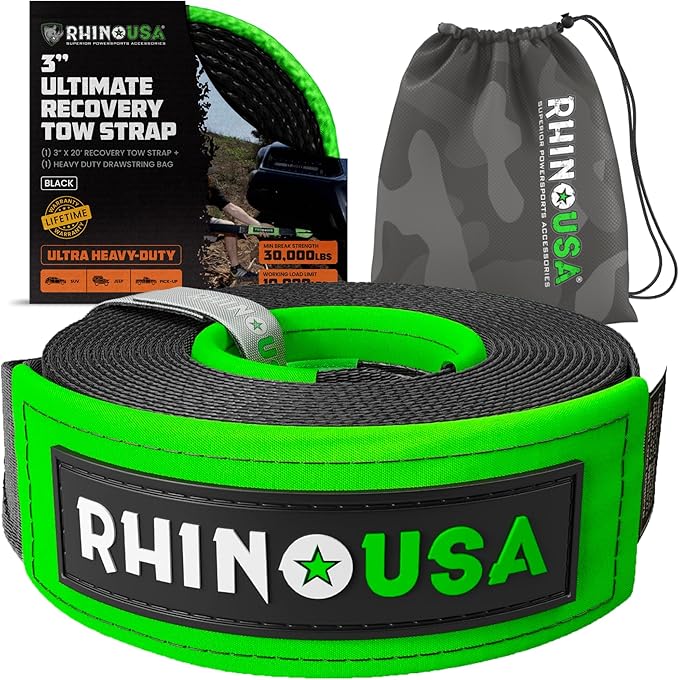
Kinetic Recovery Rope
Elastic stretch for gentler extractions in low traction.
Disclosure: Some links are affiliate links that help fund hands-on testing at no extra cost to you.