Tier 2 Overland Recovery Kit: The Essential Upgrades
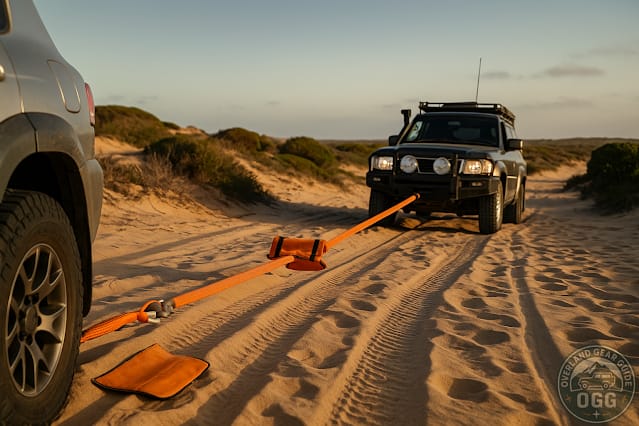
Why Tier 2? It bridges simple traction fixes and full expedition gear. Add a kinetic rope for momentum-friendly pulls, a tree saver + dampener for safe anchors, a tire plug kit for field repairs, GMRS comms for coordination, and board mounts so recovery tools are always ready.
What’s in the Tier 2 upgrade
- Kinetic recovery rope (rated) + compatible soft shackles.
- Tree saver (wide strap) + line dampener for anchored pulls/winching.
- Tire repair kit (plugs, tools, spare valves) to fix most tread punctures fast.
- GMRS radio (handheld or mobile) for convoy and recovery comms.
- Mounting pins/brackets to hard-mount traction boards for instant access.
Where Tier 2 shines
- Soft sand & mud: A controlled run-up with a kinetic rope gives the nudge Tier 1 can’t.
- Anchored pulls: Tree saver protects living anchors and spreads the load; a dampener reduces recoil risk.
- Punctures: Plugging a tire keeps you rolling and saves the spare for real emergencies.
- Group travel: GMRS keeps spotter and driver in sync; recoveries finish quicker with fewer mistakes.
- Board access: Hard-mounted boards get used more—because they’re not buried under cargo.
Build your Tier 2 kit (reliable picks)

Kinetic Rope (Rated)
Elastic stretch stores energy to “pop” a stuck rig free—use with rated points.
View on Amazon
Tree Saver + Dampener
Protect anchors and reduce recoil risk for winching/anchored pulls.
View on Amazon
Tire Repair Kit (Plugs & Tools)
Plugs, rasp/inserter, valves—practice once at home and you’re set.
View on Amazon
GMRS Handheld or Mobile
Clear convoy comms and better spotting. Check local licensing rules.
View on Amazon
Board Pins & Brackets
Lockable, quick-release mounts—so boards are deployed in seconds.
View on AmazonSizing & ratings — quick reference
- Kinetic rope: Size to vehicle GVWR (+ gear). Midsize 4x4s often ~7/8″, full-size ~1″. Buy reputable brands with a published MBS.
- Soft shackles: Match rope/strap diameters and recovery point geometry; verify labeled MBS.
- Tree saver: Wide (≈3″) to protect bark and distribute load; enough length to bring both eyes together at the anchor.
- GMRS: Handheld = flexibility; vehicle mobile + external antenna = range/clarity. Program channels/tones before departure.
- Board mounts: Use lockable pins; re-torque after corrugations. Inspect lanyards and hardware.
Kinetic rope technique (safe & effective)
- Rig safely: Rated recovery points only; soft shackles preferred. Never tow balls/tie-downs.
- Set distance: Lay slight slack; take up tension smoothly.
- Controlled pulls: Low gear, modest speed. Let the rope stretch, then recoil you forward.
- Perimeter clear: Bystanders well outside the load path, off to the sides.
- Inspect & reset: Check rope/shackles/points every attempt; stop if anything looks wrong.
Abort & reassess if you feel wheel hop/violent jerks—adjust PSI, use boards, or change angle.
GMRS convoy comms card (copy/paste)
- Channel: __ • Tone: __ • Backup: __
- Call signs: Lead __ • Tail __ • Spotter __
- Check-ins: Every 15 min or junctions.
- Spotter calls: “Stop”, “Driver”, “Passenger”, “Straight”, “Slow”.
- Recovery net: Only lead + spotter transmit unless asked.
Tip: Even handhelds benefit massively from a roof-center mag-mount antenna.
Plug or swap? Quick decision tree
- Plug it: Single tread puncture; hole size suits plug; sidewalls intact.
- Swap to spare: Sidewall damage, bead issues, multiple punctures, or leaks after a plug.
- After any plug, inflate to spec and monitor pressure for 24–48 hours.
Quick guides you’ll actually use
Tire Plug in 5 Steps
- Find puncture; remove debris.
- Rasp hole; prep plug.
- Insert; twist & pull.
- Trim flush; re-inflate.
- Leak check; drive gently.
Mounting Boards
- Mount outside for speed; lock when parked.
- Carry 4 boards for heavy rigs/deep sand.
- Rinse & re-nest; cover from UV long-term.
Pre-rig checklist
- Gloves on; bystanders clear.
- Rated points & hardware verified.
- Agree commands: Ready / Rolling / Abort.
- Use dampener on steel cable; consider on synthetics when appropriate.
- Spotter visible or on GMRS. One spotter only.
Common mistakes to avoid
- Standing in the line of fire during kinetic pulls.
- Mismatched ratings (rope too light/heavy for vehicle mass).
- Skipping dampener on steel winch lines.
- No comms plan—driver/spotter out of sync.
- Boards buried under cargo and never used.
Disclosure: Some links are affiliate links. As an Amazon Associate we earn from qualifying purchases (at no extra cost to you). This helps us keep building free tools and guides.